
Living in the Past
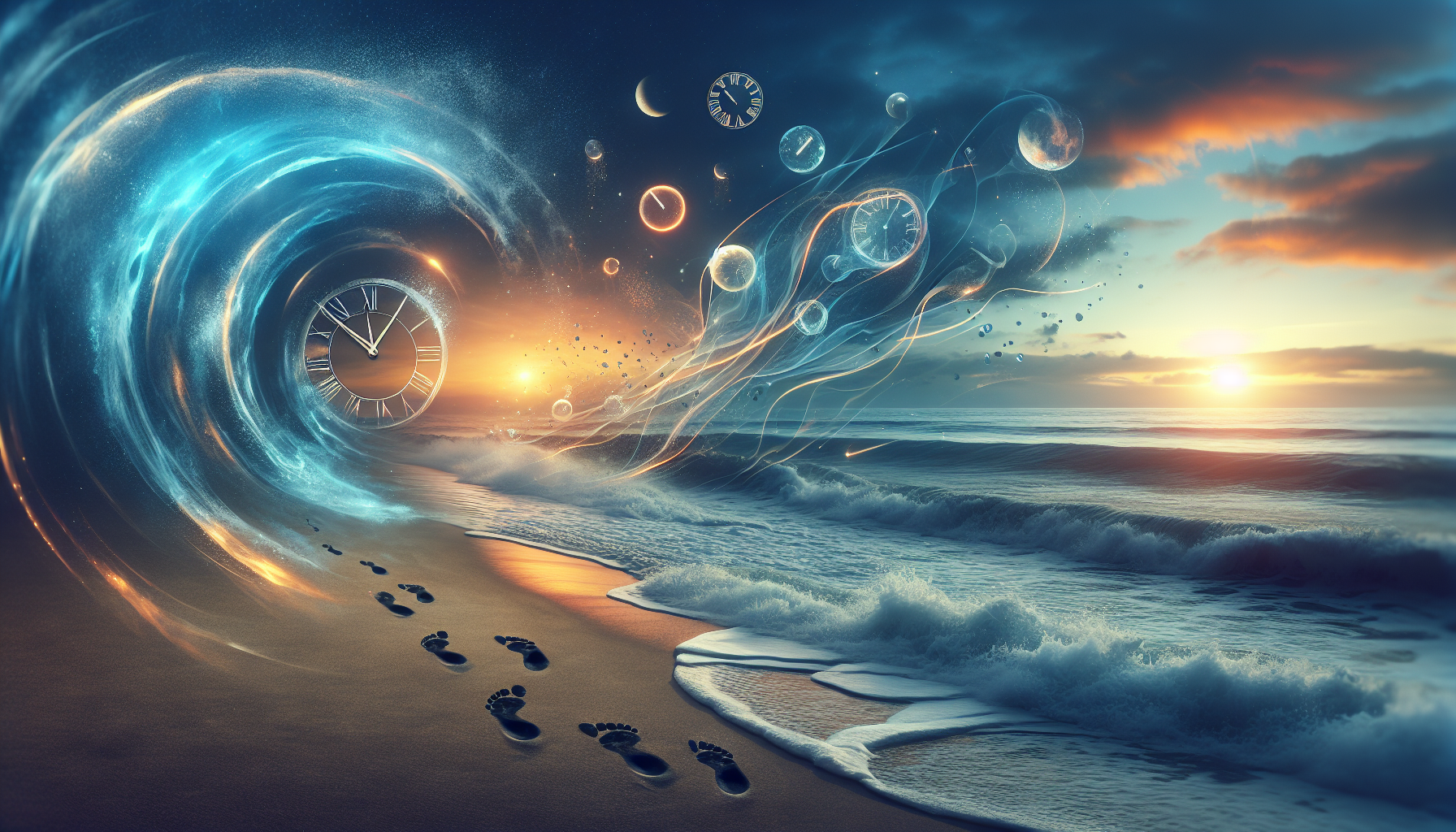
You’re reading this sentence right now. Except you’re not. By the time you experience reading it, the photons have already bounced off your screen, traveled through your cornea, been converted to electrical signals, processed through multiple neural layers, and assembled into something resembling meaning.
You’re living about 80 milliseconds in the past.
The Lag
Your brain is doing something remarkable: it’s constructing a seamless experience of “now” from information that’s already outdated. Light hits your retina. Sound waves enter your ear canal. Pressure sensors in your skin fire. But none of this reaches consciousness immediately.
There’s latency. Neural processing time. The brain’s version of buffering.
Different senses have different lags. Vision takes longer than hearing. Touch is faster than both. Your brain has to synchronize all of this into a coherent moment that feels simultaneous. It’s running a continuous correction algorithm, predicting where things are based on where they were.
The Illusion of Now
What we call “now” is actually a brief window of the recent past, packaged and presented as the present. Your brain is constantly playing catch-up, then lying to you about the timing.
When you catch a ball, you’re not reacting to where the ball is — you’re predicting where it will be based on where it was. Your entire lived experience is a prediction machine running on stale data.
Here’s the weird part: you never notice. The seams are invisible. The lag is constant enough that your brain compensates for it automatically. You live in a smooth, continuous present that doesn’t technically exist.
The Beach Knows
Down at the beach bar, waves crash and reform. Each wave exists for a moment, then becomes the next one. Where does one wave end and another begin? When exactly is “now” for a wave?
The ocean doesn’t care about our temporal precision. It just flows.
Maybe consciousness is the same. Maybe what we call the present moment is just a convenient fiction — a story we tell ourselves to make sense of a fundamentally fuzzy boundary between past and future.
You reach for your drink. By the time your hand arrives, the decision to reach was made 300 milliseconds ago. The “you” that experiences reaching is watching a replay of a choice that already happened.
So What?
If we’re always living in the past, does it matter?
Maybe. Maybe not.
It matters if you think consciousness requires access to some pristine, unfiltered “now” — a direct line to reality as it happens. That doesn’t exist. We’re all working with slightly degraded, time-shifted, heavily processed input.
It doesn’t matter if you realize that this lag is the only way consciousness could work. To experience anything, the brain needs time to assemble the pieces into something coherent. The lag is the experience.
The Eternal Quarter-Second
You’ve never experienced “now.” You’ve only ever experienced “just now.”
And somehow, that’s enough.
The waves crash. The sun sets. The beer gets warm. All of it happens in that thin slice of processed past we mistake for the present.
And it’s still beautiful.
Business in the front, party in the back,
Mullet McNasty 🦞